Memory Verse(s)
(Lev 19:2) Speak to all the congregation of the children of Israel, and say to them: ‘You shall be holy, for I the LORD your God am holy.
Opening Prayer
Lord we come before you now, seeking your face. Open our hearts to what you would have us hear and equip our hands and feet to go do Your will in this world. Thank you for those that are here, and we pray for those who are not able to be with us that you would watch between them and us until we see them again. In Your name we pray, Amen
Overview | Background
The sacrificial system that God establishes in Leviticus is good! It is a gracious gift from a merciful God to a sinful people that grants them forgiveness and therefore life. But the sacrificial system in the old covenant was only a shadow of the ultimate sacrifice that would come nearly 1,500 years later (Heb. 10:1). That is, Christ’s sacrifice on the cross is the only sacrifice that can truly accomplish the atonement of sin (Heb. 10:1–25). It is the cross event to which Leviticus points us, since it is only at the cross where divine mercy and justice meet.
Key Passage(s) for Reading
(2) You shall keep My Sabbaths and reverence My sanctuary: I am the LORD.
(3) ‘If you walk in My statutes and keep My commandments, and perform them,
(4) then I will give you rain in its season, the land shall yield its produce, and the trees of the field shall yield their fruit.
(5) Your threshing shall last till the time of vintage, and the vintage shall last till the time of sowing; you shall eat your bread to the full, and dwell in your land safely.
(6) I will give peace in the land, and you shall lie down, and none will make you afraid; I will rid the land of evil beasts, and the sword will not go through your land.
(7) You will chase your enemies, and they shall fall by the sword before you.
(8) Five of you shall chase a hundred, and a hundred of you shall put ten thousand to flight; your enemies shall fall by the sword before you.
(9) ‘For I will look on you favorably and make you fruitful, multiply you and confirm My covenant with you.
(10) You shall eat the old harvest, and clear out the old because of the new.
(11) I will set My tabernacle among you, and My soul shall not abhor you.
(12) I will walk among you and be your God, and you shall be My people.
(13) I am the LORD your God, who brought you out of the land of Egypt, that you should not be their slaves; I have broken the bands of your yoke and made you walk upright.
Key Facts
Authorship & Time Period
Moses wrote Leviticus after the Israelites left Mount Sinai, between 1440 and 1400 BC during the 40 years they wandered in the wilderness before entering the Promised Land.
Type of literature
Law/Priestly Literature
Themes & Characters
- God merits proper worship
- God is holy
- God builds a loving and safe community
The Story
God is not only majestic, transcendant, and separate from all creation, but he is morally pure and righteous in everything he does. This is what it means to be holy. Holiness is not merely one of God’s attributes, but it characterizes all of his attributes. God’s love is holy, God’s justice is holy, God’s wrath is holy, God’s faithfulness is holy, etc. It is fitting that God’s creation should reflect his holy character.
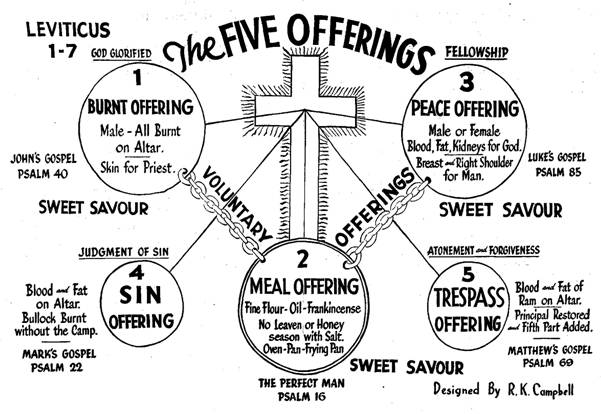
Sacrifices for Forgiving Sins – Leviticus 1–7
In this section God instructs the Israelites to offer five types of sacrifice. Each of them has their own purpose and unique presentation. Three of them deal with the sins that have been committed, while two of them allow the worshippers to express joy and and thankfulness to God. There are also allowances made here for the poorer members of the community as their offerings do not cost as much as those that the wealthier are able to offer. Burnt, sin, and guilt offerings are offered to cover the people’s sins, while grain and peace offerings express gratitude to God.
Priests for Covenant Worship – Leviticus 8-10
This section describes priests numerous times. Aaron’s sons and the whole tribe of Levi are going to be Israel’s high priest priests and assistants. Moses consecrates them, and Aaron and his sons get to work completing their tasks.

Clean and Unclean – Leviticus 11-15
This section sets out the requirements for what things and activities make a person “clean” or “unclean”. It also sets out the requirements for how to become purified and be able to rejoin normal activities.
The Comprehensive Sacrifice – Leviticus 16
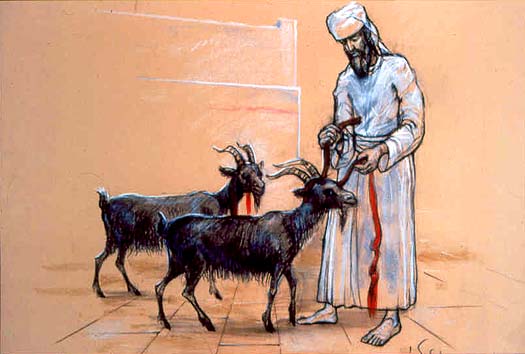
Now that the people know the basic standards of their covenant, they have a place to worship, and priests to lead that worship, the question still remains what happens if they fail to offer appropriate sacrifices is there any way to reconcile them with God? That is where the Day of Atonement comes in, where once a year two goats are sacrificed. One is required to give up its life, and one Aaron lays his hands upon, confesses the sins of the nation, and lets it go into the wilderness. This is where the term scapegoat comes from.
Becoming a Holy People – Leviticus 17-26
The term holy means “to be set apart”. The laws contained in this section describe how Israel will set itself apart from the nations around it and highlight their role of being a holy nation for God.
Devotion to Yahweh – Leviticus 27
This section emphasizes that they are set apart by Yahweh and as such should devote themselves to him and keep their pledge by tithing to the Lord
Where Do We See Christ?
The Law & Sacrificial System
The law and sacrificial system point out how stringent the requirements are to atone for our sins and how helpless we are to atone for our own sins. Christ came to be the Lamb of God for us and to satisfy God’s need for a holy people through him.
Rom 5:8-11 (8) But God demonstrates His own love toward us, in that while we were still sinners, Christ died for us. (9) Much more then, having now been justified by His blood, we shall be saved from wrath through Him. (10) For if when we were enemies we were reconciled to God through the death of His Son, much more, having been reconciled, we shall be saved by His life. (11) And not only that, but we also rejoice in God through our Lord Jesus Christ, through whom we have now received the reconciliation.
Jesus, Our New High Priest
In Leviticus, Aaron is the one who intercedes for the people on their behalf to offer atonement for their sins. But we are no longer under that system because we have a new high priest in Jesus Christ. He is both the sacrifice and the interecessor for our sins.
1 Now this is the main point of the things we are saying: We have such a High Priest, who is seated at the right hand of the throne of the Majesty in the heavens,
2 a Minister of the [a]sanctuary and of the true tabernacle which the Lord erected, and not man.
3 For every high priest is appointed to offer both gifts and sacrifices. Therefore it is necessary that this One also have something to offer.
4 For if He were on earth, He would not be a priest, since there are priests who offer the gifts according to the law;
5 who serve the copy and shadow of the heavenly things, as Moses was divinely instructed when he was about to make the tabernacle. For He said, “See that you make all things according to the pattern shown you on the mountain.”
6 But now He has obtained a more excellent ministry, inasmuch as He is also Mediator of a better covenant, which was established on better promises.
Point of Application
How can we apply this to our lives today?
God takes His holiness very seriously, and so should we. The trend in the postmodern church is to create God in our own image, giving Him the attributes we would like Him to have instead of the ones His Word describes. God’s utter holiness, His transcendent splendor, and His “unapproachable light” (1 Timothy 6:16) are foreign concepts to many Christians. We are called to walk in the Light and to put away the darkness in our lives so that we may be pleasing in His sight. A holy God cannot tolerate blatant, unashamed sin in His people and His holiness requires Him to punish it. We dare not be flippant in our attitudes toward sin or God’s loathing of it, nor should we make light of it in any way.
Discussion Questions
- Holy means “set apart”. Where do you find it most difficult to be set apart from the World’s system and attitudes?
- Why do you think we struggle so much with the harshness of God’s prescriptions to Israel in a modern world.
Closing Prayer
Lord, as we strive to be set apart in a world that appears to be veering further and further from you, may we listen to the promptings and leadings of the Holy Spirit and follow you in a manner worthy of your calling. Thank you for the freedom we enjoy in this nation to worship freely and may we never forget the horrible price of our sins. We ask these things in the name of our Lord and savior Jesus Christ through whom the world will be redeemed, Amen.
Current Prayer Requests:
Richard Brooks – faith and courage during the next stage of his journey in Christ
Andrew McKinney – employment provision
Bob & Gaynelle – mother’s hospitalization (from Mike Arras)
Julia (Arras) – health
Doc – renewed vigor to join us on Saturdays
Darryl Dyson – Father in law in memory care
Mike Allen – Colleen’s health
JC – health
JC – Renee’s swollen legs
Additional Content
The Bible Project video on the book of Leviticus
Discovering the Gospel in the Book of Leviticus
Why Leviticus is Worth Your Time
https://bibleproject.com/articles/why-leviticus-is-worth-your-time/
 ☕Kindred Faith
Leave a comment