Memory Verse(s)
Yours, O Lord, is the greatness,
The power and the glory,
The victory and the majesty;
For all that is in heaven and in earth is Yours;
Yours is the kingdom, O Lord,
And You are exalted as head over all.
Overview|Background
In the Hebrew Bible, the Chronicles are the last book (remember they are one book like Samuel and Kings) of the OT and are a recap of the stories of the Kings, Samuel, and the Prophets. The Books of 1 & 2 Chronicles cover mostly the same information as 1 & 2 Samuel and 1 & 2 Kings. Perhaps the biggest distinction is that 1 & 2 Chronicles focus more on the priestly aspect of the time period. The Book of 1 Chronicles was written after the exile to help those returning to Israel understand how to worship God. The history focused on the Southern Kingdom, the tribes of Judah, Benjamin, and Levi. These tribes tended to be more faithful to God.
Key Passage(s)
God’s Covenant with David
15 According to all these words and according to all this vision, so Nathan spoke to David.
16 Then King David went in and sat before the Lord; and he said: “Who am I, O Lord God? And what is my house, that You have brought me this far? 17 And yet this was a small thing in Your sight, O God; and You have also spoken of Your servant’s house for a great while to come, and have regarded me according to the rank of a man of high degree, O Lord God. 18 What more can David say to You for the honor of Your servant? For You know Your servant. 19 O Lord, for Your servant’s sake, and according to Your own heart, You have done all this greatness, in making known all these great things. 20 O Lord, there is none like You, nor is there any God besides You, according to all that we have heard with our ears. 21 And who is like Your people Israel, the one nation on the earth whom God went to redeem for Himself as a people—to make for Yourself a name by great and awesome deeds, by driving out nations from before Your people whom You redeemed from Egypt? 22 For You have made Your people Israel Your very own people forever; and You, Lord, have become their God.
23 “And now, O Lord, the word which You have spoken concerning Your servant and concerning his house, let it be established forever, and do as You have said. 24 So let it be established, that Your name may be magnified forever, saying, ‘The Lord of hosts, the God of Israel, is Israel’s God.’ And let the house of Your servant David be established before You. 25 For You, O my God, [a]have revealed to Your servant that You will build him a house. Therefore Your servant has found it in his heart to pray before You. 26 And now, Lord, [b]You are God, and have promised this goodness to Your servant. 27 Now You have been pleased to bless the house of Your servant, that it may continue before You forever; for You have blessed it, O Lord, and it shall be blessed forever.”
David’s Admonition to Solomon
19 “All this,” said David, “the Lord made me understand in writing, by His hand upon me, all the [a]works of these plans.”
20 And David said to his son Solomon, “Be strong and of good courage, and do it; do not fear nor be dismayed, for the Lord God—my God—will be with you. He will not leave you nor forsake you, until you have finished all the work for the service of the house of the Lord.
Key Facts
Authorship & Time Period
The Book of 1 Chronicles does not specifically name its author. The tradition is that 1 and 2 Chronicles were written by Ezra. Full Article: Who wrote the book of 1 Chronicles? Who was the author of 1 Chronicles?
The Book of 1 Chronicles was likely written between 450 and 425 B.C. Full article: When was 1 Chronicles written?
Type of literature
Historical narrative
Characters
MAJOR CHARACTERS: Yahweh, Levi, David, Solomon, Hezekiah, and Josiah.
MINOR CHARACTERS: Jehoshaphat and Manasseh.
The Story
Summary
God rules history from creation to the Decree of Cyrus through his promises to his people in his written Word and his deeds in history.
The first 9 chapters of 1 Chronicles are dedicated to lists and genealogies. Further lists and genealogies are scattered throughout the rest of 1 Chronicles. In between, the Book of 1 Chronicles records David’s ascension to the throne and his actions thereafter. The book concludes with David’s son Solomon becoming King of Israel. Briefly outlined, the Book of 1 Chronicles is as follows: Chapters 1:1-9:23 – Selective Genealogies; Chapters 9:24-12:40 – David’s ascent; Chapters 13:1-20:30 -David’s reign.
The Book of 2 Chronicles records the history of the Southern Kingdom of Judah, from the reign of Solomon to the conclusion of the Babylonian exile. The decline of Judah is disappointing, but emphasis is given to the spiritual reformers who zealously seek to turn the people back to God. Little is said about the bad kings or of the failures of good kings; only goodness is stressed. Since 2 Chronicles takes a priestly perspective, the Northern Kingdom of Israel is rarely mentioned because of her false worship and refusal to acknowledge the Temple of Jerusalem. Second Chronicles concludes with the final destruction of Jerusalem and the Temple.
Major Events
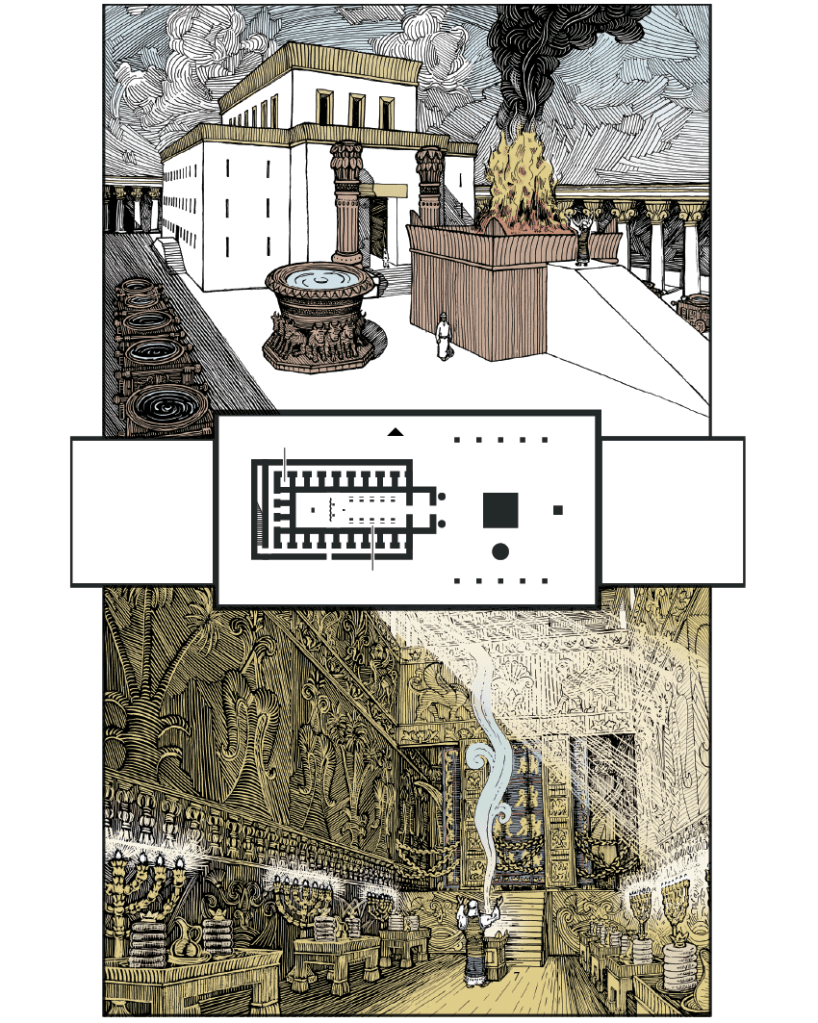
- David’s rule and preparations for the temple,
- Solomon’s reign and the importance of the temple and priesthood
- The decline and fall of David’s monarchy
- The destruction of Jerusalem and the temple
- Cyrus’s decree
Themes
- God’s covenant with David
- The importance of worship
- The significance of Scripture
- The positive aspects of Israel’s past and future
Outline of 1 & 2 Chronicles
- Genealogies: Creation to Restoration (1Ch 1-9)
- The Reign of David (1Ch 10-29)
- Death of Saul (ch. 10)
- Capture of Jerusalem; David’s Power Base (chs. 11–12)
- Return of the Ark; Establishment of David’s Kingdom (chs. 13–16)
- Dynastic Promise (ch. 17)
- David’s Conquests (chs. 18–20)
- The Census (ch. 21)
- Preparations for the Temple (ch. 22)
- Organization of the Temple Service (chs. 23–26)
- Administrative Structures of the Kingdom (ch. 27)
- David’s Final Preparations for Succession and the Temple (28:1;29:20)
- Succession of Solomon; Death of David (29:21-30)
- The Reign of Solomon (2Ch 1-9)
- The Schism, and the History of the Kings of Judah (2Ch 10-36)
Where Do We See Christ?
The Temple is built on the site where Abraham almost sacrificed Isaac, which was a picture of the Son of God being actually sacrificed for our sins.
The Davidic covenant is only partially fulfilled in Chronicles. In many ways, Chronicles presents an idealised version of David. There is no mention of his adultery with Bathsheba and the murder of her husband, and there is no description of the downward spiral of his household after this incident. Yet, among other faults, Chronicles says that David is a man of violence. He fights God’s legitimate wars, but because of bloodshed he is not able to build the temple (1 Chronicles 22:8). Solomon is a man of peace, and as such, he is the one who builds the temple (1 Chronicles 22:9-10). But by the end of Chronicles, there is no king on the throne in Israel, let alone one from David’s line.
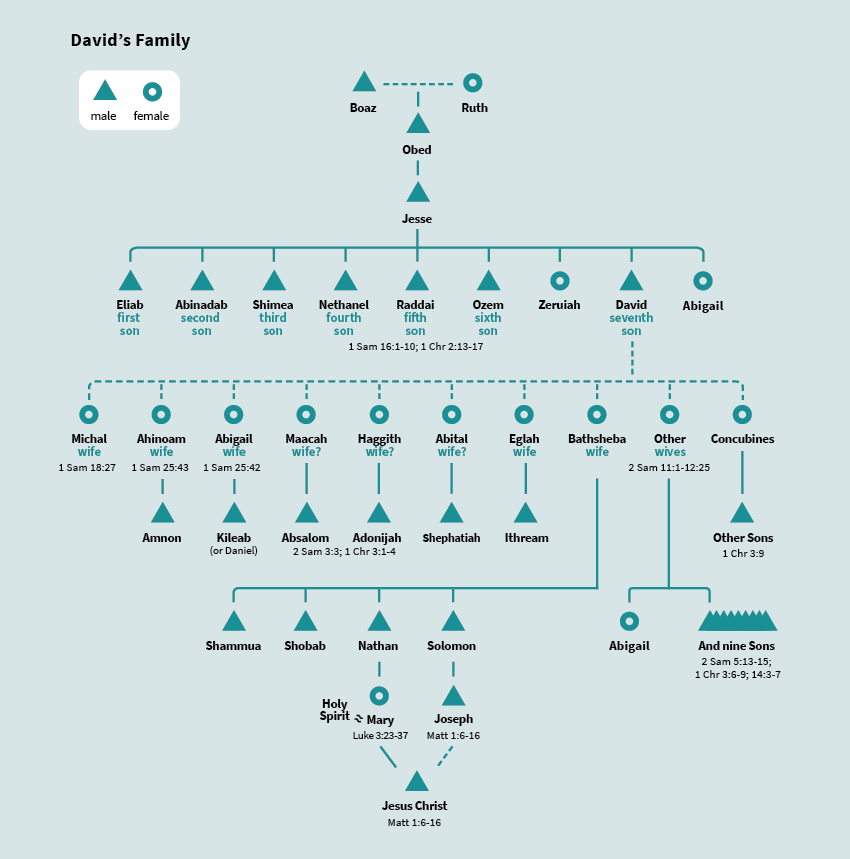
The partial fulfilment of the Davidic covenant in Chronicles looks forward to its complete fulfilment in Jesus. Jesus is in the line of David (Matthew 1:1–17). He is the perfect king, without fault, and so he reigns eternally on the throne, as promised by God. He wins the victory, not over military enemies, but over Satan, sin and death (e.g., Colossians 2:13–15; Hebrews 2:14–15). He wins not by violence and military might but through shedding his own blood on the cross. He is the greatest Son of David.
Point of Application
How can we apply this to our lives today?
The reader of the Chronicles is invited to evaluate each generation from the past and discern why each was blessed for their obedience or punished for their wickedness. But we are also to compare the plight of these generations to our own, both corporately and individually. If we or our nation or our church is experiencing hardships, it is to our benefit to compare our beliefs and how we act upon those beliefs with the experiences of the Israelites under the various kings. God hates sin and will not tolerate it. But if the Chronicles teach us anything, it is that God desires to forgive and heal those who will humbly pray and repent (1 John 1:9).
Discussion Questions
- How can we reconcile God’s sovereignty, as seen in these genealogies, with human free will?
- If you were to create a spiritual genealogy of your own life, who would be included and why?
Closing Prayer
Lord, help us to be thankful for the rich spiritual heritage in our own lives and to honor it in our daily walk with You.
Current Prayer Requests:
Doc – renewed vigor to join us on Saturdays
Richard Brooks – faith and courage during the next stage of his journey in Christ
Andrew McKinney – employment provision
Bob & Gaynelle – mother’s hospitalization (from Mike Arras)
Julia (Arras) – health
Jim Allen, friend of Daryl, heart issue, VLAP operation
Jim Sachs – job situation, improvement, wisdom for interaction with leadership
Daryl’s employee Tara – ill (possible tumor) in Cambodia
Daryl’s Grandson, Mack and Mack’s parents Jonathan and Lizz. Healing for Mack, comfort for Jonathan and Lizz
Tom and Jeanice – Divine Healing and Peace in their spirit
Becky and Lee Davidson, health and healing
Jim & Melissa, father-in-law’s heart condition and spiritual health, marital closeness
Mike Arras’ daughter, mental and spiritual health
Mike Arras’ son, Trevor – employment
Mike Allen – sister Adele and brother
Joe & Deb – safe travel, peace, and healing for Deb’s Dad
Additional Content
Insight For Living – First Chronicles
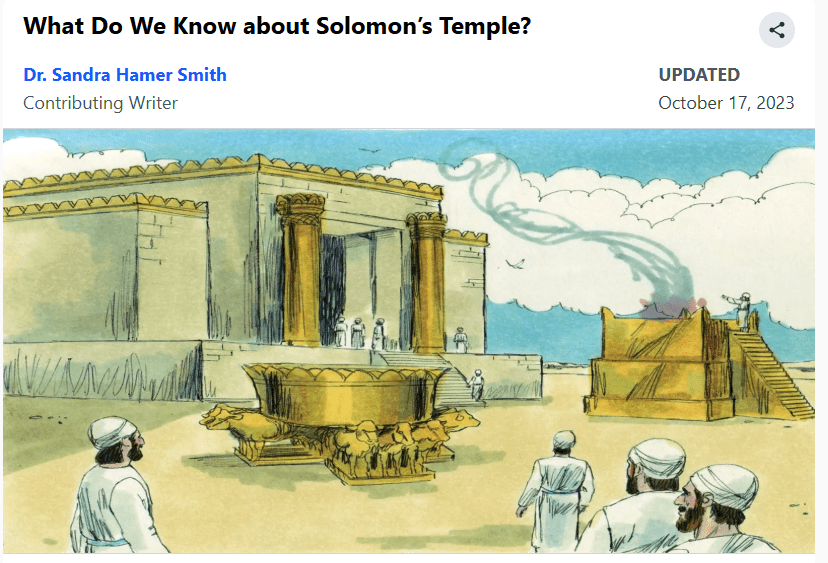
Article: What do we know about Solomon’s Temple?

Leave a comment